Running a successful convenience store in Ontario means making every square foot of retail space count. As operational costs, inventory expenses, and labour overhead continue to rise, relying solely on high-volume, low-margin products, like basic tobacco or lottery, is no longer enough to maintain healthy profit margins.
To build a thriving, profitable store, independent owners and chain operators alike must optimize their merchandising strategy. Smart product placement directly influences consumer psychology, increases dwell time, and boosts impulse buys—turning quick visits into higher basket totals.
Below, we break down 5 high-margin product placement strategies designed specifically for Ontario convenience store operators looking to maximize ROI and drive bottom-line growth.
1. Optimize the “Gold Mine Zone” at the Checkout Counter
The sales counter is the most valuable real estate in your entire store. Every single paying customer visits this area, making it the prime target for high-margin impulse purchases.
Customers standing in line or waiting during payment processing are in a receptive frame of mind. Placing small, high-margin items within arm’s reach leverages decision fatigue and impulse buying.
High-Margin Items to Feature:
- Ready-to-Drink (RTD) Beverages & Energy Shots: Premium functional drinks, local cold brews, and single-serve energy shots carry significantly higher profit margins than standard sodas.
- Innovations & Novelty Items: Fast-dissolving vitamin strips (like QuickStrip™), premium oral care, and specialized wellness products.
- Confectionery & Premium Snacks: Gourmet chocolate bars, artisan jerky, and seasonal candy grab-and-go items.
Placement Best Practices:
- Keep items organized by tier. Use tiered counter displays to keep products at eye level without obstructing the cashier’s view or interaction with the customer.
- Rotate impulse stock every 30 to 45 days to give regular neighbourhood customers something new to look at.
2. Capitalize on Expanded Categories Near the Entrance
First impressions dictate store navigation. When customers walk through your front doors, the immediate visual space; often referred to as the “decompression zone”, sets the tone for their visit.
With major industry shifts, such as the expansion of Ready-to-Drink (RTD) alcohol sales and beverage modernization across Ontario convenience stores, positioning high-margin seasonal and craft offerings near the entrance immediately signals variety and convenience to incoming shoppers.
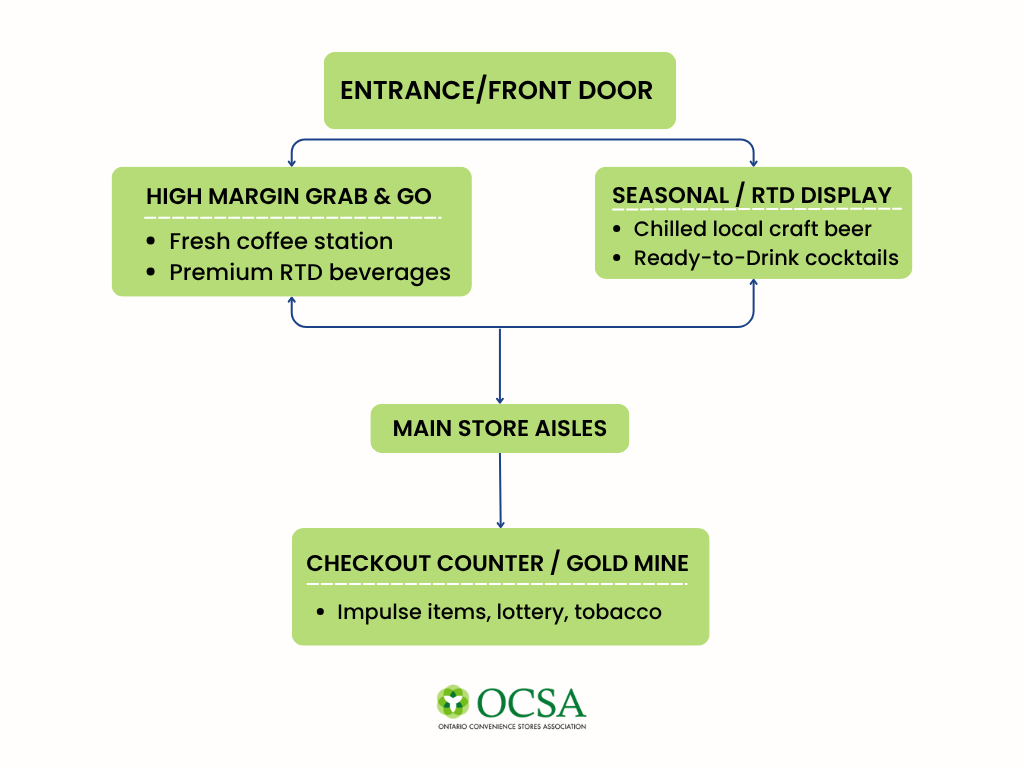
Strategic Recommendations:
- Feature Cold-Buster Endcaps: Place grab-and-go coolers featuring local craft beers, ciders, and RTD beverage options near the front perimeter.
- Cross-Merchandise with Snacking: Pair premium beverage displays with high-margin snack pairings (e.g., upscale chips, specialty nuts, or artisanal meat sticks).
3. Leverage Eye-Level Framing on High-Traffic Aisles
In retail merchandising, the adage holds true: “Eye level is buy level.” Products positioned between shoulder and waist height receive over 35% more visual attention than those on bottom or top shelves.
Reserve these prime eye-level slots strictly for your highest-margin inventory rather than standard commodity goods.
How to Structure Shelving Tiers:
- Eye Level (48″ to 60″ from the floor): Reserve for high-margin products like specialty wellness items, premium e-liquids/vape devices from authorized suppliers, and local gourmet packaged goods.
- Touch Level (30″ to 48″): Place high-demand staples and leading national brands here. Customers actively look for these products, so they do not need prime eye-level positioning to sell.
- Bottom Shelves (Below 30″): Use for heavy, bulky, or low-margin commodity items like gallon water, multi-packs, or paper products.
4. Build High-Margin Destination Zones (Coffee & Foodservice)
Foodservice and fresh coffee programs consistently yield some of the highest profit margins in the convenience channel—often ranging from 50% to 70%+ gross margin. However, performance depends heavily on store layout.
To maximize sales, position your hot coffee or grab-and-go food station toward the back corner of the store.
The “Siphon Effect” Strategy:
- Drive In-Store Traffic: Forcing customers to walk through your main store aisles to reach the coffee bar or hot food display increases exposure to secondary product categories.
- Adjacency Placement: Surround your fresh beverage area with high-margin bakery items, fresh fruit, breakfast bars, and travel-sized essentials.
- Maintain Flawless Cleanliness: High-margin fresh food programs rely entirely on consumer trust. A clean, well-lit, fully stocked station directly impacts repeat visits.
5. Implement Effective Cross-Merchandising Tactics
Cross-merchandising is the practice of displaying complementary products from different categories together to drive secondary purchases. When done thoughtfully, it reminds customers of items they need (or want) without requiring them to search the store.
[ Core Product ] [ Complementary High-Margin Item ]
Chilled Craft Beer / RTD ───► Gourmet Pretzel / Artisanal Dip Display
Hot Fresh Coffee ───► Pastry Case / Single-Serve Protein Bars
Seasonal Lottery / Tickets ───► Gift Card / Greeting Card Carousel
Proven Convenience Store Pairings:
- Alcohol & Gourmet Snacks: Pair chilled craft beers or RTD beverages with high-end dips, gourmet pretzels, or artisanal beef jerky.
- Lottery & Greeting Cards: Place gift cards and greeting card displays directly adjacent to your OLG lottery terminal, targeting shoppers purchasing gifts or celebratory tickets.
- Tech & Travel Essentials: Position mobile charging cables, adapters, and power banks near automotive supplies or travel-sized health and beauty products.
Key Takeaways for Ontario Retailers
Optimizing product placement isn’t about redesigning your store overnight—it’s about making deliberate, data-driven tweaks to how products are displayed.
| Strategy | Focus Area | Expected Business Outcome |
| 1. Checkout Counter | Front counter / Register | Maximizes last-minute, high-margin impulse sales |
| 2. Entrance Zones | Store front / Decompression zone | Drives immediate awareness for high-value categories (RTDs, seasonal) |
| 3. Eye-Level Shelving | Main store aisles | Directs customer eyes to your highest-margin SKUs |
| 4. Destination Zones | Rear store corners | Forces store navigation, increasing overall basket size |
| 5. Cross-Merchandising | Category adjacencies | Triggers complementary impulse buys across distinct categories |
By implementing these placement strategies, independent convenience store owners across Ontario can turn everyday floor space into a more efficient, high-margin revenue engine.